

Requirements
To follow the steps in this guide, you’ll need:- Organization Admin permissions in Omni
- Permissions in ClickHouse that allow you to access connection credentials
Setup
Retrieve ClickHouse connection details
- In ClickHouse, navigate to the warehouse you want to connect to Omni.
- Click Connect in the sidebar.
-
A dialog like the following will display:
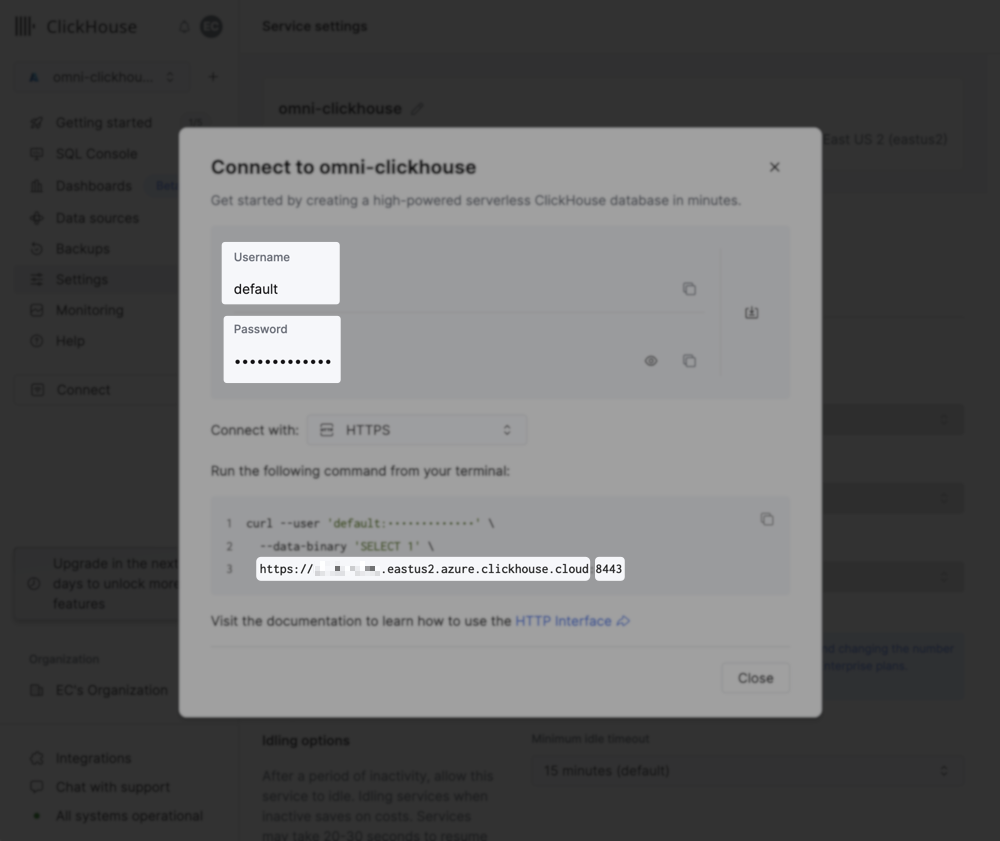
-
Username - In the above image, the username is ClickHouse’s default (
default), but this may differ for you.If you want to use a different (non-default) Clickhouse user, verify that the user has, at a minimum,SELECTpermissions for:- All schemas you want to include in the Omni model
INFORMATION_SCHEMA.SCHEMATAINFORMATION_SCHEMA.TABLES
- Password
-
Host - This is a string similar to
https://<some-string>.eastus2.azure.clickhouse.cloud -
Port - In the above image, the port is
8443
Allowlist Omni's IP addresses
If access to ClickHouse is limited by IP address, you’ll need to add Omni’s IPs to the allowlist before you create the database connection.Omni’s IP addresses can be found on an individual connection’s page, accessed by navigating to Settings > Connections and clicking a connection.
Create the connection in Omni
- In Omni, click Settings > Connections.
- Click the ClickHouse option.
-
On the connection setup page, fill in the connection details:
requiredA user-friendly name for the connection, which will be used throughout Omni.requiredThe address of the database server.default:"8443"requiredThe port number for the database connection.requiredThe username for database authentication.requiredThe password for database authentication.Whether to trust the server's SSL/TLS certificate without validation. Enable this option when connecting to a database that uses a self-signed certificate or a certificate signed by an internal certificate authority that Omni cannot otherwise verify.requiredThe timezone used by the database.requiredThe timezone to use for Omni queries. If a timezone is specified, data will be converted from the Database Timezone to the selected timezone.When enabled, users can override the connection timezone with their own when querying.requiredSelect the minimum level of access users should have to models in the connection.
- When finished, click Create connection.
What’s next?
Now that your database is set up, you can:- Use the Omni Agent’s quickstart skill to create your first topic from business questions
- Configure user permissions, schema refreshes, environments and timezone settings
- Learn how Omni generates the model associated with the connection